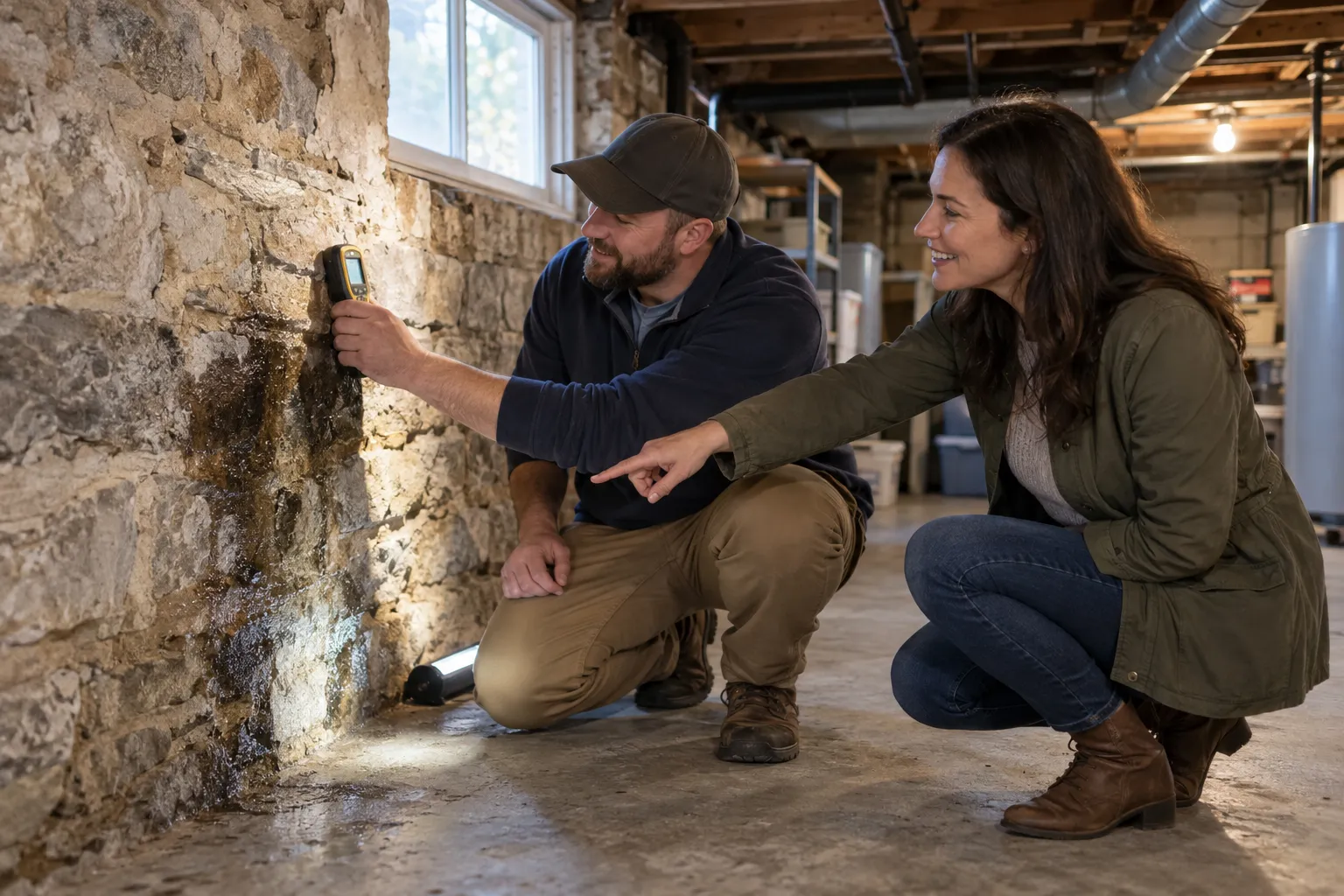
A stain on the wall is not always mold. A musty smell does not always mean a hidden problem either. An inspection tells you what is really going on, so you stop guessing and start fixing the right thing.
Leastonto Mold Help is a referral service. We do not inspect or test anything ourselves. We connect homeowners in Philadelphia and the Philadelphia area with independent providers in our network who do. They look at moisture, check hidden spots, and take samples when it makes sense. You get a written report you can use to plan next steps, whether that is a simple cleanup or a bigger job.
Think You Have Mold? Start Here
Look first. Smell second. Dark spots, fuzzy patches, peeling paint, or a damp, earthy odor are all clues. Take a photo of anything you see.
Then ask one question: where is the water coming from? Fix the water first. Mold keeps coming back until the moisture is gone.
What You Can Safely Do Yourself
You can do a lot of the early work. Check around windows, under sinks, and along the foundation. Look at the attic for frosty or damp roof boards. Use a flashlight and a dry cloth.
You can also run a dehumidifier, open a window on a dry day, and move boxes away from damp walls. Those steps slow things down. They do not replace an inspection.
Know Where to Stop
Stop if the patch is bigger than a few square feet. Stop if anyone in the home has asthma, allergies, or a weak immune system. Stop if you smell mold but cannot see it.
Do not cut into walls or stir up dust. That can spread spores to clean rooms. This is the point where a provider is worth it.
When an Inspection Makes Sense
Book one after a leak, a burst pipe, or a flooded basement. Book one before you buy or sell a home. Book one when family members feel worse at home and better away from it.
It also helps after a cleanup, to confirm the job worked.
What Happens During an Inspection
A provider starts with a talk. You describe the smells, the leaks, and the rooms that worry you. Then they walk the home.
They often use a moisture meter and a thermal camera. These tools find wet spots behind paint and drywall without opening anything up. They check basements, crawl spaces, attics, and areas around plumbing.
Types of Mold Testing
Not every inspection needs a test. Many providers test only when it helps answer a clear question. Common options include:
- Air samples: capture spores floating in a room. They are often compared with an outdoor sample.
- Surface samples: a swab or tape lift from a visible spot to identify the type.
- Bulk samples: a small piece of material sent to a lab.
If you search for certified mold testing, ask what training a provider holds and which lab they use. Ask for the details in writing.
Why Seasons Change the Picture
In cold, snowy places, winter keeps windows shut and air stale. Warm indoor air hits cold walls and leaves condensation. Spring snowmelt pushes water against stone and block foundations. Coastal storms can drive rain into older roofs and siding.
Tell the provider about recent weather. It helps them know where to look. Samples taken after a heavy rain may read differently than those taken in a dry spell.
Older Homes Need Extra Eyes
Full basements, stone foundations, and older Cape-style homes all have quirks. Rubble walls let moisture wick through. Old crawl spaces trap damp air. Multi-family buildings share walls and pipes, so a leak next door can show up in your unit.
Understanding Your Results
A good report is plain. It lists where samples were taken, what was found, and how it compares with outdoor air. It should also note moisture readings and likely causes.
Mold is part of normal outdoor air, so a few spores indoors are not alarming. What matters is high counts, odd types, or growth tied to wet materials.
Inspection and Remediation: Separate or Together?
Some homeowners like the inspector and the remover to be different providers. That gives you a neutral report and a second opinion on the work. Others prefer one provider for both because it is simpler.
Either choice is fine. Ask each provider how they handle it and request the plan in writing.
How to Prepare for Your Inspection
Get ready the day before. Do these things:
- Clear access to the basement, attic, and crawl space.
- Write down where leaks, smells, or stains have shown up.
- Keep windows and doors closed for a few hours before air sampling, if the provider asks.
- Gather past repair or water-damage records.
Dry it, then decide. Do not clean the area first, because that can hide clues.
Questions to Ask the Provider
- What will the inspection include, and what will be extra?
- Will you take samples, and why those spots?
- Which lab do you use, and how long do results take?
- Will I get a written report and a repair plan?
- Can you help document damage for an insurance claim?
Some policies may cover sudden damage, so check your policy.
Ready for a Clear Answer?
If you searched mold inspection near me, you want someone who can tell you the truth about the damp spot in your home. Request an estimate and get matched with a local provider.
What's Included
Visual Check
A provider looks over basements, attics, crawl spaces, and plumbing areas for signs of moisture and growth.
Moisture Readings and Imaging
Meters and thermal cameras help find damp spots hidden behind walls and ceilings.
Sampling When Needed
Air, surface, or bulk samples go to a lab when a test answers a real question.
Written Report
You get findings, moisture sources, and suggested next steps in plain language you can use.
Typical Mold Inspection and Testing Costs
Prices vary by home size, region, and how many samples you need. These are typical U.S. ranges only. Always ask for a written quote before you agree to any work.
| Item | Typical range | Notes |
|---|---|---|
| Visual inspection only | $200 – $500 | Often for smaller homes or a single area |
| Full-home inspection | $300 – $700 | Larger homes take more time |
| Air sample (each) | $50 – $150 | Usually plus an outdoor comparison sample |
| Surface or swab sample | $40 – $100 | Per spot, lab fee may be included |
| Lab analysis fees | $40 – $150 | Depends on lab and rush options |
| Thermal imaging add-on | $100 – $300 | Helps find hidden moisture |
How It Works
Share What You See
Request a callback or fill out the request form with your photos and notes.
Get Matched
Leastonto Mold Help connects you with an independent provider in our network.
Inspection and Sampling
The provider walks the home, checks moisture, and takes samples if needed.
Review the Report Together
You get written results and can plan the next step with a quote.
Why Call Leastonto Mold Help
Clear Answers
A trained provider can tell real mold from dirt, soot, or staining, so you spend money on the right fix.
Hidden Moisture
Special tools can find damp spots behind walls that you would never see.
Safer Choices
Knowing the type and spread helps you decide what is safe to handle.
Useful Records
A written report helps you plan repairs and talk with your insurer or buyer.
Other Services
Need mold inspection & testing services in Philadelphia?
- Find the water source before anything else
- Inspection and testing options
- Black mold concerns
- No-obligation estimates
Mold Inspection & Testing Services FAQ
How do I know if I need a mold inspection?
Look for a musty smell, visible spots, past leaks, or health symptoms that ease when you leave home. If you see growth bigger than a few square feet, or smell mold you cannot find, an inspection is a smart step.
Can I test for mold myself?
Store-bought kits can show spores are present, but spores are everywhere. They rarely tell you how much, what type, or where it started. A provider's methods give you more useful answers.
Do I need testing, or just an inspection?
Not always. If mold is plainly visible, a good inspection may be enough to plan the work. Testing helps when growth is hidden, when health is a concern, or when you need to confirm a cleanup worked.
Get in touch
Questions about a musty smell, a dark patch or a test result? Reach out and we will connect you with a local provider in our network. No obligation.
No obligation